Ethernet-APL is a physical layer for Ethernet developed to meet process industry requirements.
Ethernet-APL extends the capabilities of conventional Ethernet to meet the high requirements of the process industry, e.g. long cable lengths, easy installation, and explosion-proof design.
Ethernet-APL is a physical layer for Ethernet that uses a two-wire cables to bring Ethernet connectivity to field-level devices such as measurement instrumentation. It supports communication at 10 Mbit/s while also supplying power to connected devices through the same cable. Additionally, Ethernet-APL includes an intrinsic safety power concept for use in hazardous areas.
Discover the potential of Ethernet-APL in process automation
Explore how Ethernet-APL is used in industrial environments to enable digital communication, increase data accessibility, and support future-ready operations.
Diverse types of topologies can be set up with Ethernet-APL.
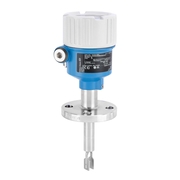
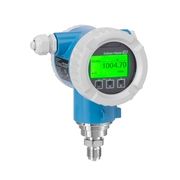
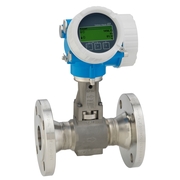
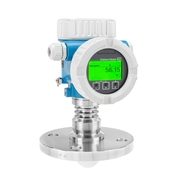
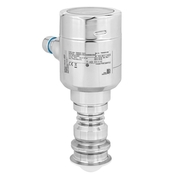
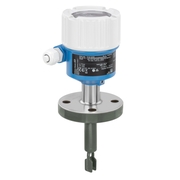
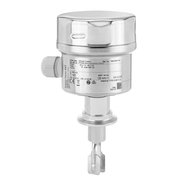
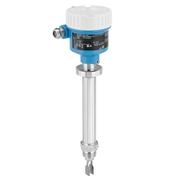
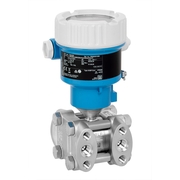
Endress+Hauser offers measuring devices that are ready for Ethernet-APL.
What is Ethernet-APL? A quick explanation
Diverse types of topologies can be set up with Ethernet-APL.
Endress+Hauser offers measuring devices that are ready for Ethernet-APL.
What is Ethernet-APL? A quick explanation
Any type of industrial Ethernet protocol or standard Ethernet application can be combined with Ethernet-APL. Endress+Hauser has launched PROFINET instruments as the first Ethernet-APL ready devices. Further protocols, such as Modbus TCP and EtherNet/IP, will follow.
Measuring range4 dm³/min to 9600 m³/h (1 gal/min to 44 000 gal/min)
Medium temperature rangeLiner material PFA: –20 to +150 °C (–4 to +302 °F) Liner material PFA high-temperature: –20 to +180 °C (–4 to +356 °F) Liner material PTFE: –40 to +130 °C (–40 to +266 °F)
Measuring rangeLiquid: 0.2 to 2100 m³/h (0.15 to 1520 ft³/min) depending on medium: water with 1 bar a, 20 °C (14.5 psi a, 68° F) Steam, gas: 1.5 to 28000 m³/h (0.9 to 16600 ft³/min) depending on medium: steam with 180 °C, 10 bar a (356 °F, 145 psi a); air with 25 °C, 4.4 bar a (77 °F, 63.8 psi a)
Medium temperature rangeStandard: –40 to +260 °C (–40 to +500 °F) High/low temperature (option): –200 to +400 °C (–328 to +752 °F)
Max. process pressurePN 100, Class 600, 20K
Wetted materialsMeasuring tube: 1.4408 (CF3M); CX2MW similar to Alloy C22, 2.4602 DSC sensor: 1.4404 (316/316L); UNS N06022 similar to Alloy C22, 2.4602 Process connection: 1.4404/F316/F316L); 2.4602



%20with%20flange%20connections%20for%20process%20applications%20-%20PP01.jpg "Picture of Electromagnetic flowmeter Proline Promag P 300 / 5P3B for process applications")